
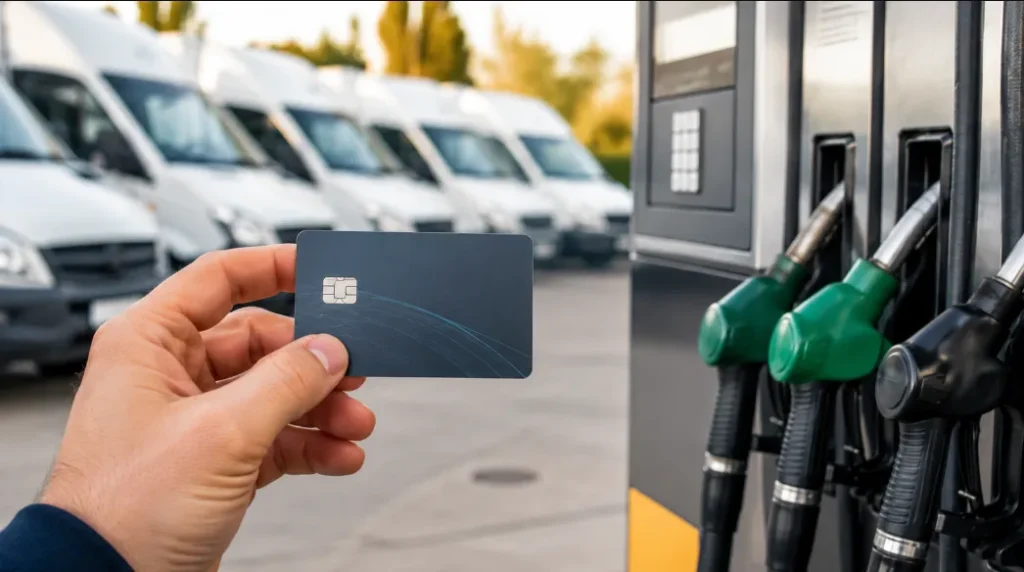
Every time a driver fills up on a personal card and submits a receipt three weeks later, the company is flying blind. There is no way to verify the purchase in real time, no control over what was bought, and no automated record tying the transaction to a specific vehicle or route. Business gas card programs exist to fix that disconnect. They put enforceable rules at the point of sale and feed every transaction into a central reporting system where managers can actually see what is happening with their fuel budget. The difference between hoping drivers spend responsibly and knowing exactly what they spent is the difference between manual tracking and a dedicated card program.
The hidden cost of uncontrolled driver purchases
Without a structured fuel payment system, drivers make purchase decisions on their own. Some fill up at the nearest station regardless of price. Others add convenience store items to the same receipt. A few might fuel personal vehicles on the company’s dime, knowing that nobody checks individual charges closely enough to notice the pattern.
Research from Visa Commercial Solutions puts a number on this problem: unauthorized spending accounts for roughly 3 percent of fleet fuel transactions in the U.S., totaling an estimated $2 billion in annual losses across all businesses affected. That figure does not include the softer costs of poor fueling habits like consistently choosing premium fuel when regular is specified, or filling up at high-price stations when a cheaper option sits a mile away.
Business gas cards address these issues by giving managers the ability to set limits on each card before it is ever used. Controls can restrict purchases to fuel only, cap spending per transaction or per day, limit use to approved stations within the network, and block activity outside defined business hours. The card itself enforces the rules at the point of sale, which means drivers cannot override them regardless of the situation.
How purchase controls work in practice
When a driver swipes a business gas card at the pump, the system checks the transaction against preset rules in real time. If the purchase falls within the allowed parameters, it goes through. If anything is outside the limits, the card declines on the spot. There is no manual review needed and no delay between the transaction and the enforcement of the policy.
This approach to control is both a security measure and a management tool. Fleet managers can tailor settings for each driver based on their role, route, and typical fuel consumption. A local delivery driver might have a daily cap of $75, while a long-haul driver covering 500 miles a day might carry a higher limit with geographic restrictions removed to accommodate their broader travel area.
Many business gas card programs also require a PIN or driver identification number at the pump, which ties every transaction to a specific person. That layer of accountability discourages misuse and simplifies investigation when a charge looks unusual. For fleet operations managing multiple vehicles and drivers, this kind of monitoring is essential for maintaining effective cost control.
Station network access and fuel discounts
A business gas card connects drivers to a network of fuel stations where the card is accepted. Depending on the provider, that network may span thousands of locations across the country, covering highways, urban areas, and rural routes that fleet vehicles travel regularly.
Broad network access matters for both convenience and efficiency. Drivers spend less time searching for approved fueling locations and more time completing their routes and deliveries. For businesses with vehicles operating in multiple states, consistent station access ensures that fueling never becomes a logistical bottleneck that slows operations or forces drivers off their planned routes.
Many business gas card programs include negotiated discounts at participating stations. According to reporting from the Miami Herald and Ramp, fuel card rewards and discounts typically save businesses 3 to 6 cents per gallon. That figure adds up quickly for fleets burning hundreds or thousands of gallons each month and provides a direct offset against rising fuel expenses. Over a full year, those per-gallon savings translate to thousands of dollars in reduced costs for mid-size and large fleet operations.
Centralized reporting and expense tracking
Each transaction on a business gas card generates a detailed record that includes the date, time, location, number of gallons purchased, price per gallon, fuel type, and total amount. This data flows into a centralized dashboard without anyone chasing a paper receipt or keying numbers into a spreadsheet. The entire process is automated from the moment the driver swipes the card.
Managers can review spending by driver, vehicle, department, or date range to identify patterns and anomalies. The reporting tools highlight trends such as inconsistent fuel consumption between similar routes, price differences across stations, and spending spikes that may indicate a problem needing attention. This kind of tracking turns raw purchase data into actionable information that supports smarter decisions.
For the back office, centralized tracking means faster reconciliation and cleaner books. Many business gas card solutions integrate with accounting software, which eliminates duplicate data entry and reduces the errors that come with manual processes. The time savings alone justify the switch for businesses managing more than a handful of vehicles, and the improved accuracy makes financial reporting more reliable.
Scaling fuel management as the fleet grows
One of the practical advantages of business gas cards is that they scale without requiring proportional growth in administrative effort. Adding a new vehicle to the fleet means issuing a new card with the right controls already configured, not hiring someone to track another set of receipts or expanding the accounting team.
The U.S. fuel card market reached $88.03 billion in 2024 and is projected to grow at 9.4 percent annually through 2030, according to Grand View Research. That trajectory reflects broad adoption across fleets of every size, from small operations with five vehicles to enterprises managing hundreds of vehicles across multiple regions.
Business gas cards provide the same core benefits at any scale: automated expense tracking, enforceable purchase limits, fraud protection through real-time monitoring, and visibility into exactly where fuel dollars are going. As a fleet adds vehicles and drivers, the card program absorbs the additional complexity without adding overhead or requiring new processes to accommodate the growth.
Choosing a business gas card that fits
Not every card program offers the same combination of features. Some prioritize discounts at branded stations, while others emphasize universal acceptance and flexible controls. The best choice depends on the size of the fleet, the geographic range of operations, and the depth of reporting the business needs to manage expenses effectively.
Factors to evaluate include station network coverage, control customization options, dashboard and reporting quality, integration with existing accounting or fleet management systems, and available savings or rebate programs. A card with generous discounts but limited reporting may leave a business without the expense visibility it needs to optimize spending and prevent waste.
Getting control of fuel spending
Business gas cards replace informal, receipt-based fueling systems with a structured approach built on real-time data, enforceable rules, and centralized reporting. They give companies control over driver purchases, visibility into fuel costs, and a scalable solution that grows with the fleet. For any business spending meaningful dollars on fuel each month, the switch from manual tracking to a dedicated fleet card program is a straightforward step toward better cost management and more efficient operations. Whether a company needs a fuel cards solution for a small local fleet or a national operation, a business gas card delivers the structure that manual systems cannot.
